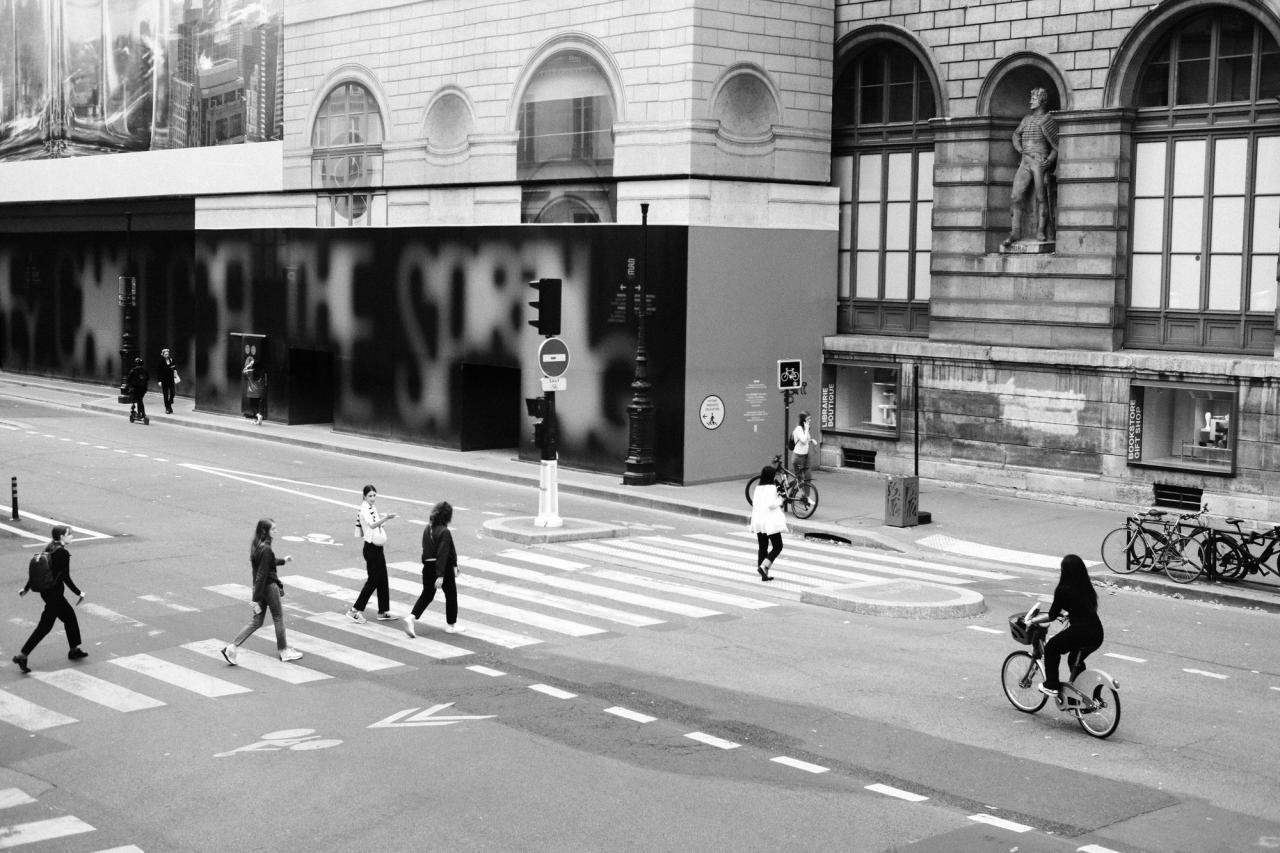
One of the biggest changes in the 2026 reform: optional benefits will only cover the named insured, spouse, dependants and listed drivers. If you're a pedestrian or cyclist, that's a coverage gap you need to know about.
TopRates.ca is educational. Quotes are not offered or arranged on this site today.
If you are hurt as a pedestrian, cyclist, or passenger in Ontario after July 1, 2026, you can still claim the three mandatory accident benefits — medical, rehabilitation, and attendant care — but you may not be able to reach the newly optional benefits (like income replacement) unless you personally hold, or are named on, a qualifying auto policy. That is the single most important thing this article explains.
This is a companion to what statutory accident benefits are. It does not re-explain the reform generally; it answers one narrow question: what happens to people who were not driving.
Which policy pays if you're hit as a pedestrian
If you or a household member has an auto policy, that policy generally responds first — you are an insured person under it even on foot; if not, the insurer of the vehicle that struck you is next, and the Motor Vehicle Accident Claims Fund is the last resort. Ontario sets that order through the priority-of-payment rules in section 268(2) of the Insurance Act, which carry a citation history ending in 1996 and were not changed by the 2026 reform.
For a pedestrian or cyclist — a “non-occupant” in the language of the Act — the order reads: first, “the insurer of an automobile in respect of which the non-occupant is an insured”; second, “the insurer of the automobile that struck the non-occupant”; third, “the insurer of any automobile involved in the incident from which the entitlement to statutory accident benefits arose”; and last, the Motor Vehicle Accident Claims Fund.
The Act's phrase “an automobile in respect of which the non-occupant is an insured” is broader than “your own car.” Under Ontario's auto-insurance definitions, a named insured, their spouse, and their dependants are insured persons under that policy even when they are on foot or on a bike. So if you or a household member has a policy, that policy commonly comes first — before the striking driver's insurer.
Accident benefits, in other words, follow the person, not the vehicle. That principle is the key to everything below.
What if you don't own a car
If you have no auto policy of your own and no spouse or dependant relationship to a household policy, the striking vehicle's insurer is generally next in line, and if no insurer can be found, the Motor Vehicle Accident Claims Fund.
Here is the plain answer many people find surprising. FSRA's consumer guidance states: if you do not have your own automobile insurance policy and are not listed on someone else's policy, you may still claim medical, rehabilitation, and attendant care benefits if you are injured in an accident. Those three are the mandatory floor, and they remain available to anyone struck by a car in Ontario.
The combined limits on that mandatory package did not change with the reform. Under O. Reg. 34/10, they are $3,500 for injuries within the Minor Injury Guideline, $65,000 (combined medical, rehabilitation, and attendant care) for a non-catastrophic impairment, and $1,000,000 for a catastrophic impairment.
What you generally do not get, as a stranger to the striking policy, is the optional benefits — the weekly income support and the rest. The next section explains why.
Do you get the optional benefits someone else bought
Generally no. This is the crux of the reform for people who were not driving.
The Statutory Accident Benefits Schedule (O. Reg. 34/10), as amended for July 1, 2026, provides that “the optional benefits set out in Parts II, IV, V and VI of this Regulation are only applicable to” four groups: the named insured; the named insured's spouse; dependants of the named insured or spouse; and “the persons specified in the policy as drivers of the insured automobile.”
A pedestrian or cyclist struck by a stranger's car is none of those things relative to that stranger's policy. So even if that driver bought rich optional coverage, a stranger claimant generally reaches only the mandatory three: medical, rehabilitation, and attendant care. FSRA's consumer materials and the Insurance Bureau of Canada both state that mandatory accident benefits still apply to uninsured pedestrians and cyclists, while optional benefits apply only to the four connected groups.
The optional benefits now out of reach for a stranger claimant include income replacement (70% of gross income to a standard $400 per week, with optional tiers of $600, $800, or $1,000); the non-earner benefit ($185 per week, after a four-week waiting period, to a maximum of 104 weeks); caregiver ($250 per week for the first person in need of care plus $50 for each additional person); housekeeping and home maintenance (up to $100 per week); death and funeral benefits; lost educational expenses; visitor expenses; and damage to personal items.
If you do have your own Ontario auto policy — even though you were walking or cycling, not driving — you reach whatever optional benefits you personally bought on it, because you are the named insured. This is the practical reward for carrying your own coverage: it travels with you onto the sidewalk and the bike lane.
There is a mechanism that can matter here. For policies with optional benefits, a new endorsement effective July 1, 2026 (OPCF 47R) lets a person who is eligible under a policy that sold optional benefits elect in writing to claim under that policy, even if section 268 would otherwise route them elsewhere. It does not, however, turn a stranger into an eligible person; it helps someone who already fits one of the four categories under some available policy.
Are passengers treated differently
For the optional benefits, no — occupancy does not help. A passenger who is not the named insured, spouse, dependant, or a listed driver on the responding policy is in the same position as a pedestrian: mandatory benefits respond, optional benefits generally do not.
The priority ladder differs slightly in wording — for an occupant, the second step is the insurer of the automobile in which they were riding — but the eligibility gate for optional benefits is identical. Being inside the car does not make you a named insured on its policy.
Two everyday contrasts show the effect. A child injured in a parent's car is generally a dependant under the parent's policy and reaches whatever optional benefits the parent bought. The same child injured in a neighbour's car is a guest: mandatory benefits respond, but the neighbour's optional benefits generally do not, unless the child is listed or has a household-policy connection of their own.
What if the driver is never identified
Two routes exist, and which applies depends on whether you have access to any auto policy.
Every Ontario auto policy includes uninsured automobile coverage under section 265 of the Insurance Act. It responds to bodily injury caused by an uninsured or an unidentified (hit-and-run) driver, and it extends to the named insured and household relatives while on foot. Regulation 676 sets conditions for unidentified-driver claims: the accident must be reported to a police officer within 24 hours of the accident or as soon as practicable after that time (s. 3), and a written statement must be given to the insurer within 30 days (s. 6). A two-year limitation period applies to bodily injury claims (s. 8).
If you have no policy of your own and none in your household, the Motor Vehicle Accident Claims Fund is the route for a hit-and-run. The Fund is Ontario's payer of last resort. On its official page, the province lists eligibility examples that include being struck as a pedestrian or cyclist by a vehicle that cannot be identified, and being a passenger where none of the vehicles was insured.
Optional endorsements change the picture for people who carry their own coverage. Family protection coverage (OPCF 44R) is an optional add-on that can top up recovery when an at-fault driver is uninsured, underinsured, or unidentified, and it can follow an insured person who is struck as a pedestrian or cyclist. It carries its own evidentiary hurdle: under section 1.5(D), where the driver is unidentified, your own account must be corroborated by “other material evidence” — independent witness evidence, other than that of a spouse, or physical evidence indicating that another vehicle was involved. It is not automatic — it has to be on the policy.
How do you start a claim without a policy
You still use the same form everyone else uses: the Application for Accident Benefits (OCF-1). It is the gateway to the system whether you were driving, riding, cycling, or walking.
Which insurer do you send it to? Work down the section 268 ladder. If you or a household member has a policy, apply there. If not, apply to the insurer of the vehicle that struck you or that you were riding in.
Only if no auto insurance is available should you apply to the Motor Vehicle Accident Claims Fund. The OCF-1 itself states that the insurer that first receives your completed application is responsible for paying the benefits you are entitled to without delay, and that if you have not applied to the correct insurer your benefits will not be affected — sorting out priority is the insurers' job, not yours.
The timelines matter. Under section 32 of the Schedule, you are expected to notify an insurer that you intend to apply within seven days of the accident, or as soon as practicable after. Once you receive the application package, you have 30 days to complete and return the signed OCF-1. Missing either deadline is not automatically fatal: under section 34, a late application does not disentitle you where you have a reasonable explanation for the delay, and Ontario adjudicators have accepted explanations such as serious injury and hospitalization.
For a Fund claim, the province requires the completed OCF-1 plus its own Application for Payment (Form 3) and notice of collection, a copy of the police report, and, where relevant, a letter confirming no policy was in force. All auto-accident injuries should be reported to police. The Fund can be reached at its toll-free line, 1-800-268-7188.
One threshold point often missed: for benefits to apply at all, there must be an “accident” as the Schedule defines it — “an incident in which the use or operation of an automobile directly causes an impairment.” A cyclist or pedestrian does not need to have been physically struck in every conceivable case, but the injury must be directly caused by the use or operation of a vehicle. Ontario decision-makers apply a two-part “purpose” and “causation” test, and the result is fact-specific.
What should you check now
Because the newly optional benefits follow the person, the question worth asking is not “what did the driver buy?” but “what coverage travels with me?” Some points to weigh:
- If you cycle or walk and do not own a car, ask whether you are a spouse or dependant under a household member's auto policy — that status is what reaches optional benefits, and it exists even when you are not in the car.
- If you own a policy, consider whether your written elections at renewal keep or decline optional benefits such as income replacement and non-earner coverage, since a renewing policy carries benefits forward unless declined in writing.
- Ask whether other coverage you already hold — workplace disability, private health, or life insurance — would fill the gap the optional auto benefits used to fill. From July 1, 2026, the auto insurer generally pays first for medical and rehabilitation (medication is the exception, where the health plan still pays first).
- Weigh whether family protection coverage (OPCF 44R) belongs on a policy you control, given it can follow you as a pedestrian or cyclist.
These are questions to raise, not directives. What changes them is your own household structure and whether you have access to any policy at all. For the sequence after a crash, see what happens after a collision.
TopRates.ca is educational. Quotes are not offered or arranged on this site today.
Sources
- Financial Services Regulatory Authority of Ontario (FSRA), “After an Accident: Understanding the Claims Process” — mandatory vs. optional benefits from July 1, 2026; eligibility narrowing to named insured/spouse/dependants/listed drivers; statement that people without their own or a listed policy may still claim medical, rehabilitation and attendant care; 7-day notice; MVACF as payer of last resort. Checked August 2026.
- CanLII, O. Reg. 34/10 Statutory Accident Benefits Schedule (as amended by O. Reg. 383/24), subsection added by O. Reg. 383/24 s.1(2) limiting optional benefits in Parts II, IV, V and VI to four groups; s.3(1) definition of “accident”; s.18(3) combined medical/rehab/attendant-care limits ($65,000 / $1,000,000); s.12 non-earner benefit ($185/week, four-week wait). Checked August 2026.
- Insurance Act, R.S.O. 1990, c. I.8, s.268(2) priority-of-payment rules for occupants and non-occupants (citation history R.S.O. 1990, c. I.8, s.268(2); 1993, c.10, s.1; 1996, c.21, s.30(3,4)); verbatim non-occupant subparagraphs including “the insurer of the automobile that struck the non-occupant,” as reproduced by Lerners LLP and Iacobelli Law Firm. Checked August 2026.
- Government of Ontario (Ministry of Public and Business Service Delivery and Procurement), “Motor Vehicle Accident Claims Fund” — eligibility examples for pedestrians/cyclists/passengers and hit-and-run; required documents (OCF-1, Form 3, police report); minimum liability payout up to $200,000; toll-free line 1-800-268-7188. Checked August 2026.
- Insurance Bureau of Canada, “Ontario Auto Insurance Changes” — mandatory benefits still apply to uninsured pedestrians and cyclists; optional benefits limited to named insured, spouse, dependants and listed drivers. Checked August 2026.
- FSRA, “Customize your liability and accident benefits coverage” and OCF-1 Application for Accident Benefits form (AF-145E) — optional-benefit list; first-payer rule (auto insurer first for medical/rehab except medication); the first-insurer-pays and “wrong insurer” statements; 7-day notice and 30-day return. Checked August 2026.
- FSRA, “FSRA auto reform accident benefits optionality Q&A for Insurers” and OPCF 47R endorsement text (AF-162E 2026) — optional-benefit eligibility and the written-election mechanism. Checked August 2026.
Sources used in this article
- CanLII — O. Reg. 34/10, Statutory Accident Benefits Schedule (as amended by O. Reg. 383/24): the subsection limiting optional benefits in Parts II, IV, V and VI to four groups; s.3(1) definition of “accident”; s.18(3) combined medical/rehabilitation/attendant-care limits; s.12 non-earner benefit. Checked August 2026.
- Financial Services Regulatory Authority of Ontario (FSRA) — Automobile Insurance Rating and Underwriting Guidance, and FSRA consumer guidance on the claims process and on customizing liability and accident benefits coverage. Checked August 2026.
- Insurance Act, R.S.O. 1990, c. I.8 — s. 268(2), priority of payment for occupants and non-occupants; citation history R.S.O. 1990, c. I.8, s. 268 (2); 1993, c. 10, s. 1; 1996, c. 21, s. 30 (3, 4). Checked August 2026.
- Motor Vehicle Accident Claims Act, R.S.O. 1990, c. M.41 — s. 6(1), recourse against the Fund for statutory accident benefits under s. 268 of the Insurance Act. Checked August 2026.
- Uninsured Automobile Coverage, R.R.O. 1990, Reg. 676 (under the Insurance Act) — s. 3 (24-hour police report for unidentified-driver claims), s. 6 (30-day written statement), s. 8 (two-year limitation for bodily injury). Checked August 2026.
Frequently asked questions
I was hit by a car while walking — whose insurance pays?
If you or a household member has an auto policy, that policy generally responds first, because you are an insured person under it even on foot. If not, the striking vehicle's insurer is next, and the Motor Vehicle Accident Claims Fund is the last resort. Mandatory medical, rehabilitation, and attendant care benefits are available either way.
Do I need car insurance if I only cycle?
You are not legally required to insure a bicycle. But after July 1, 2026, having your own auto policy — or being a spouse or dependant on a household one — is what unlocks the optional benefits (like income replacement) if you are struck. Without that connection, you generally receive only the mandatory three benefits.
I don't own a car — can I still claim accident benefits?
Yes. You can claim the mandatory medical, rehabilitation, and attendant care benefits by applying to the striking or host vehicle's insurer, or to the Motor Vehicle Accident Claims Fund if no insurance is available. The optional benefits generally will not be available to you unless you are a named insured, spouse, dependant, or listed driver under some qualifying policy.
What if the driver drove off?
If you have your own or a household policy, uninsured automobile coverage can respond to a hit-and-run, though insurers commonly require independent corroboration that another vehicle was involved. If you have no policy access, the Motor Vehicle Accident Claims Fund is the route.
As a passenger, do I get my friend's optional benefits?
Generally no. Unless you are listed on that policy or connected to it as spouse or dependant, you receive the mandatory benefits, not your friend's optional ones. Your own policy, or a household policy naming you, is where your optional benefits would come from.
TopRates Editorial
Independent editorial — we don't sell or arrange coverage